
Johnson County Criminal Court Cases
Johnson County criminal court cases are divided by jurisdiction. Johnson County Court handles misdemeanors, traffic and ordinance matters, plus the first stages of felony cases. A felony may begin there with a complaint, first appearance, bond decision, and preliminary process. If the case is bound over, the prosecution proceeds in Johnson District Court, the general-jurisdiction court for felony trials. Both courts sit at the Tecumseh courthouse, but they use separate contacts and do not have the same criminal role.
The clerk is the custodian of the filed case, not the police narrative or booking intake. Johnson County Court can be reached at 402-335-6313. District Court Clerk Kathleen Nieveen maintains the felony-level file at 351 Broadway, P.O. Box 416, Tecumseh, NE 68450, and can be reached at 402-335-6300. Courthouse hours are 8:00 a.m. to 12:30 p.m. and 1:00 to 4:30 p.m. on weekdays. That half-hour midday closure matters when planning a counter search.
Johnson County Court Roles
The court level tells a reader where to ask for a Johnson County criminal case record. County Court is the likely starting point for a misdemeanor, traffic charge, or a newly filed felony. District Court is the place for a felony information, felony arraignment, trial, judgment, or later District Court motion. A search result that lists the court and case number is therefore more useful than a name match alone.
The official County Court and District Court listings show the split in local jurisdiction. The Johnson County Court source also gives the county-level contact, while the Johnson District Court source identifies the felony court within District 1.
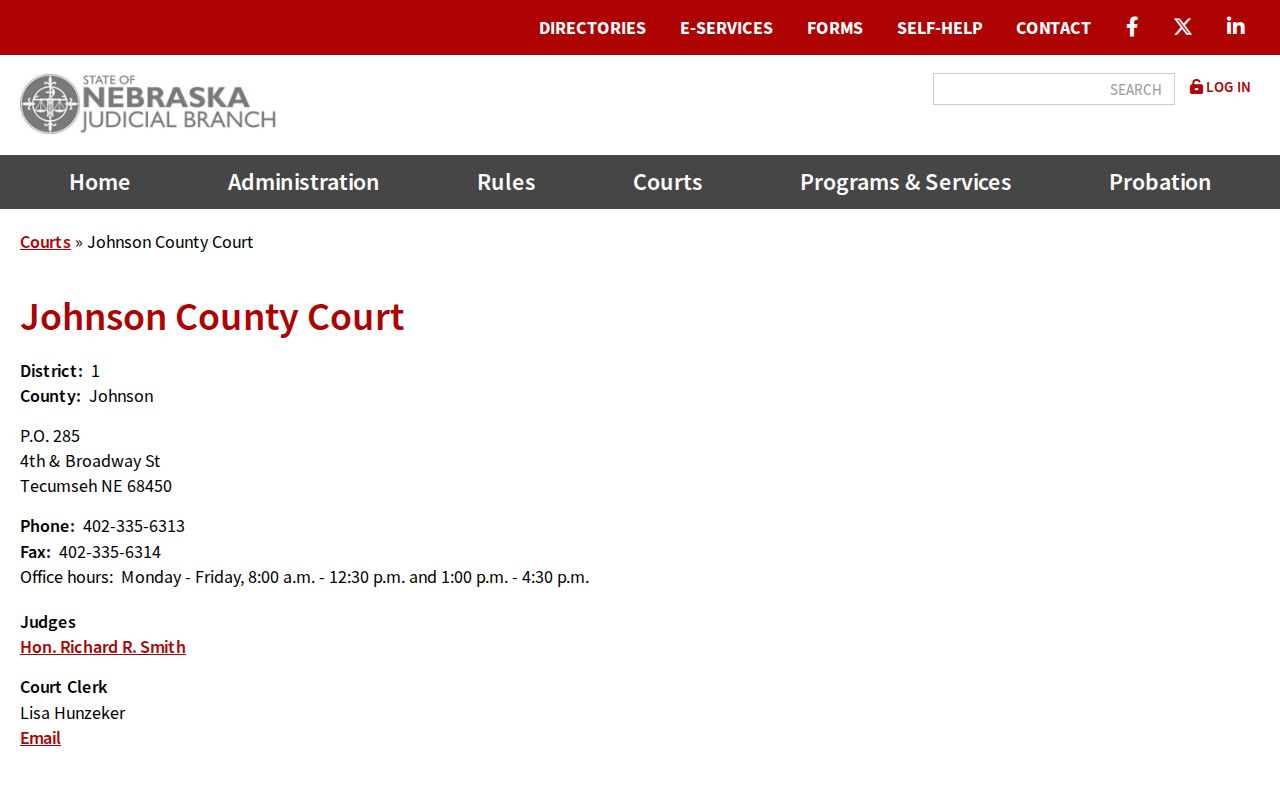
The two official listings help prevent a common mistake: asking the District Court clerk for a misdemeanor file that remains in County Court.
Searching Johnson County Case Records
JUSTICE, Nebraska Trial Courts Case Search, is the main remote path for public Johnson County case records. The official JUSTICE access FAQ explains its scope and result fields. It spans County Court and District Court cases across all 93 Nebraska counties, with a stated 24-hour lag for new entries. One-time access costs $17 even when no record is returned, displays no more than 30 cases, and leaves the result available for three calendar days. Start with a broad party-name search. Add birth date, case type, or year only if the result set is too large.
- Open JUSTICE, read the terms, check the agreement box, and select “Begin Search.”
- Enter the party name first. A party is a named litigant, not a witness.
- If more than 30 cases match, narrow with birth date, criminal case type, or case year.
- Match the case number and court, then read the register of actions in date order.
- Ask the named Johnson County clerk for an older image, public copy, or certification that remote access does not provide.
| Field Label | Type | Required | Notes |
|---|---|---|---|
| Terms agreement | Checkbox | Yes | Must be accepted before “Begin Search” |
| Party Name | Text | Yes for name route | Use the name alone before adding filters |
| Birth Date | Date | No | Helps narrow common-name results |
| Case Type | Dropdown | No | Select criminal when a broad result needs narrowing |
| Case Year | Text or dropdown | No | Narrows results to a filing year |
| Case Number | Text | Subscriber route | Direct detail lookup for an exact Johnson County case |
Keep the receipt or access details until the three-day viewing window ends. Record the Johnson County case number before leaving the result screen because that identifier makes later clerk contact far more precise.
Three Johnson Court Access Paths
Remote access is useful, but it is not the only Johnson County court-record channel. A one-time JUSTICE search gives up to 30 case matches for $17 and does not include document images. Subscriber detail costs $2 per case effective January 1, 2026 and can include public images. A courthouse terminal offers free searches by name or case number. The clerk remains the source for older paper material, a filing that was not imaged, and any certified copy that is available.
The Nebraska court records search policy describes these official access routes. Johnson County has not published a current copy or certification fee schedule, so ask the proper clerk for a cost before ordering.
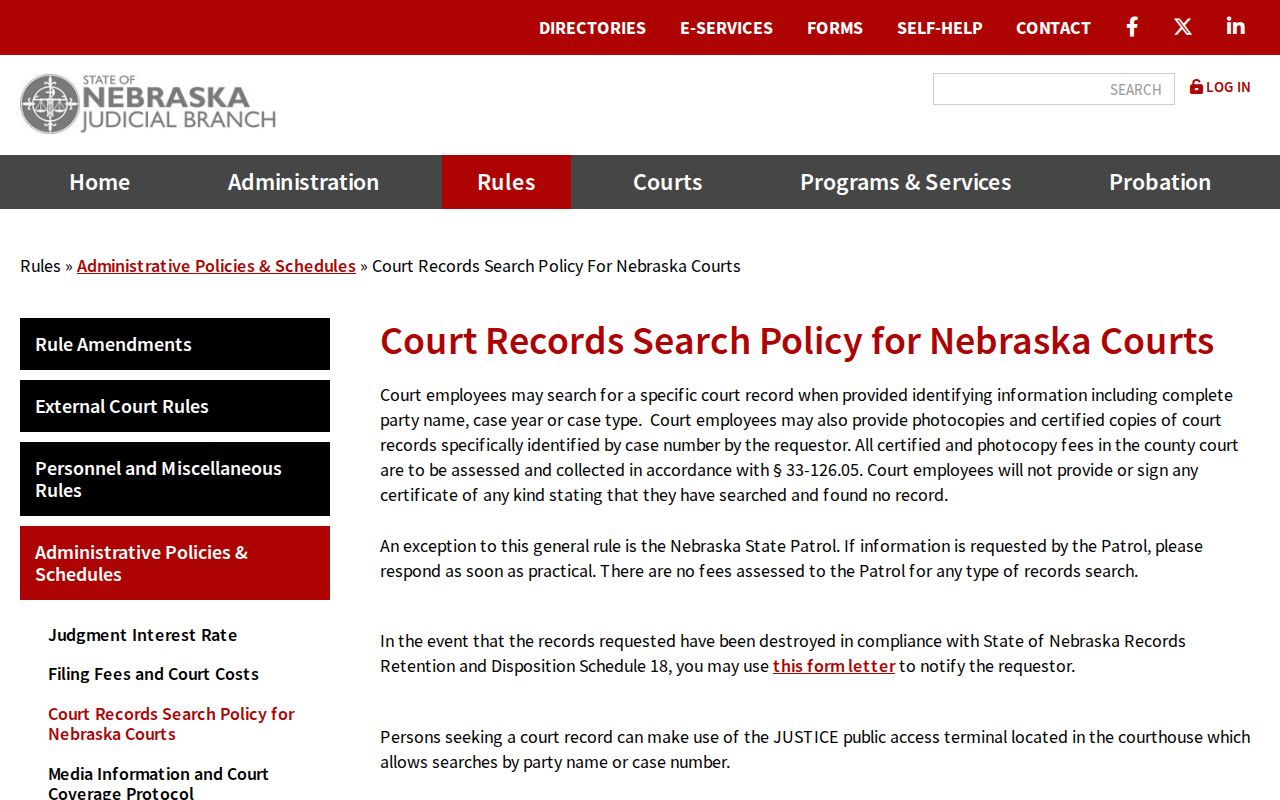
The policy image reinforces why a paid online match and a clerk-issued record are separate products with different levels of detail.
Inside a Johnson County Case File
A Johnson County case file tracks litigation after a charge is filed. JUSTICE can show the case summary, parties, offense data, judge, financial entries, status, and a chronological register of actions. Public images are generally available for documents filed or uploaded after April 16, 2008 through the access tier that supplies images. Sealed cases, confidential juvenile material, protected identifiers, and nonpublic documents remain outside the public view.
| Case Number and Court | Identifies the exact Johnson County file and whether County Court or District Court holds it. |
|---|---|
| Charging Document | States the formal allegation filed by the prosecutor, which may differ from the booking charge. |
| Register of Actions | Lists filings, hearings, orders, pleas, judgment, and later events in date order. |
| Parties and Counsel | Names the State, defendant, and attorneys when entered in the court system. |
| Disposition and Judgment | Shows dismissal, acquittal, plea, verdict, or other recorded outcome. |
| Sentence and Costs | Records the sentence, court costs, payments, and conditions that the public file discloses. |
The booking file is not part of this inventory. For the police narrative, intake photograph, or custody facts, the Johnson County Sheriff remains the likely custodian. The court file begins with filed litigation.
Reading Johnson County Docket Events
The register of actions is the best timeline for a Johnson County criminal court case. A complaint starts the filed case. An appearance marks a court event, while “Counsel Appointed” or “Counsel Entered” identifies representation. In a felony matter, a preliminary hearing or bindover can mark the move from County Court to District Court. An information is the prosecutor’s formal felony charging paper. Arraignment is when the filed charge is stated and a plea is entered.
- Disposition
- The current or final result recorded for a charge or case.
- Register of actions
- The chronological list of filings, hearings, orders, and outcomes.
- Bindover
- The step that sends a qualifying felony matter from County Court to District Court.
- Set aside
- A later order under Nebraska law that nullifies a conviction but does not erase every record or use.
A docket event should be read in context. “Motion” alone does not reveal whether the court granted it. “Hearing” does not state the result. Open the public order or ask the clerk for the relevant document before treating a short docket label as the outcome.
How a Criminal Case Moves
A Johnson County case can start with an arrest or citation, followed by a first appearance and bond decision when custody is involved. The Johnson County Attorney then files or declines a complaint. A misdemeanor normally stays in County Court. A felony moves through the County Court preliminary process and, if bound over, continues with an information and arraignment in District Court. Motions, discovery, a plea or trial, judgment, sentence, and possible appeal or post-conviction work follow as the case requires.
Case flow: Charges Filed › Arraignment › Pretrial › Plea or Trial › Disposition › Sentencing
Not every Johnson County criminal court case reaches each stage. A prosecutor may decline to file, a court may dismiss a count, or a plea may end the case before trial. The register of actions shows the path that the specific file took.
Johnson District Clerk Records Desk
The Johnson County District Court Clerk page explains that the clerk files and preserves papers, enters returns of summons, maintains the court’s books and records, and records proceedings. Those duties make the clerk the source for the official felony file when JUSTICE lacks an image or a reader needs certification.
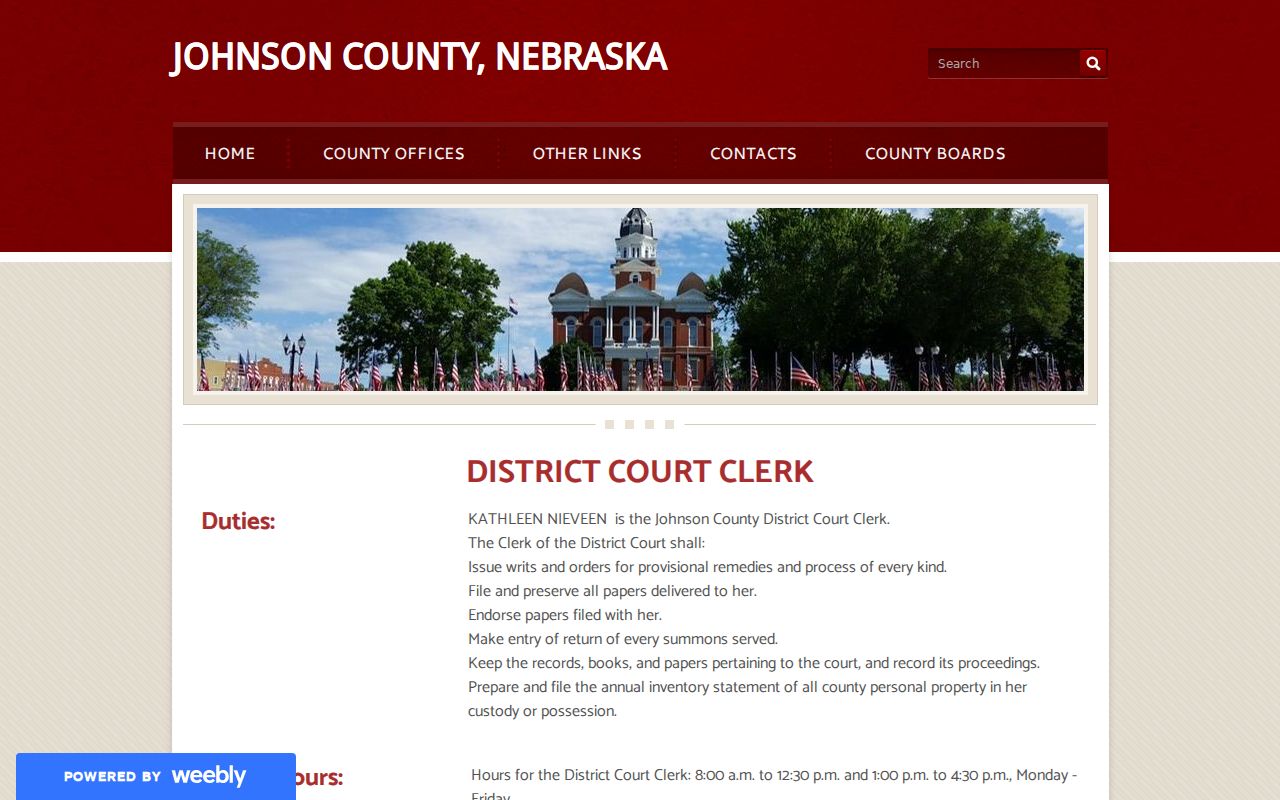
The clerk source also confirms the 351 Broadway counter, weekday split hours, phone, fax, postal address, and email used for Johnson County District Court records.
District Court Clerk
351 Broadway, P.O. Box 416
Tecumseh, NE 68450
402-335-6300
Weekdays, 8:00 a.m.-12:30 p.m. and 1:00-4:30 p.m.
Older Johnson Case Documents
Document images in JUSTICE generally reach filed or uploaded material after April 16, 2008. That date is not a promise that every later filing has a public image, and it does not mean an older Johnson County case vanished. The online case summary or register may still identify the court and case number. Use those details when contacting the clerk so staff can locate a paper, archived, or non-imaged file.
A one-time $17 search does not include document images. Subscriber detail can provide public images at the current $2-per-case rate, while the free courthouse terminal supports name and case-number searching. None of these options guarantees a certified copy. Ask the Johnson County Court clerk for a misdemeanor or preliminary felony file and the District Court Clerk for a felony file after bindover.
When more than 30 name matches appear, narrow the JUSTICE search rather than assuming the desired case is absent. Birth date, case type, and filing year can reduce the list. If the correct entry still cannot be found, the clerk can help confirm whether the spelling, court level, restricted status, filing date, or database lag explains the result.
Case Record Access & Restrictions
Nebraska permits public inspection and copying of many court records, but public access does not make every item open. Juvenile material, sealed cases, protected personal identifiers, victim-sensitive information, and documents restricted by law or court order may be withheld or redacted. A statewide search cannot reveal information that is not public. If a Johnson County case does not appear, confirm the spelling, court level, filing date, and possible 24-hour entry lag before drawing a conclusion.
Neb. Rev. Stat. §29-3523 also affects the public treatment of qualifying nonconviction history. Dismissal, acquittal, deferred judgment, or approved problem-solving court completion can lead to removal from public criminal-history dissemination after the required notice or order. That does not mean each court document was destroyed. A set-aside is another distinct remedy and remains a notation rather than complete erasure.
The official Johnson District Court listing is a reliable point for confirming the felony court before requesting access.
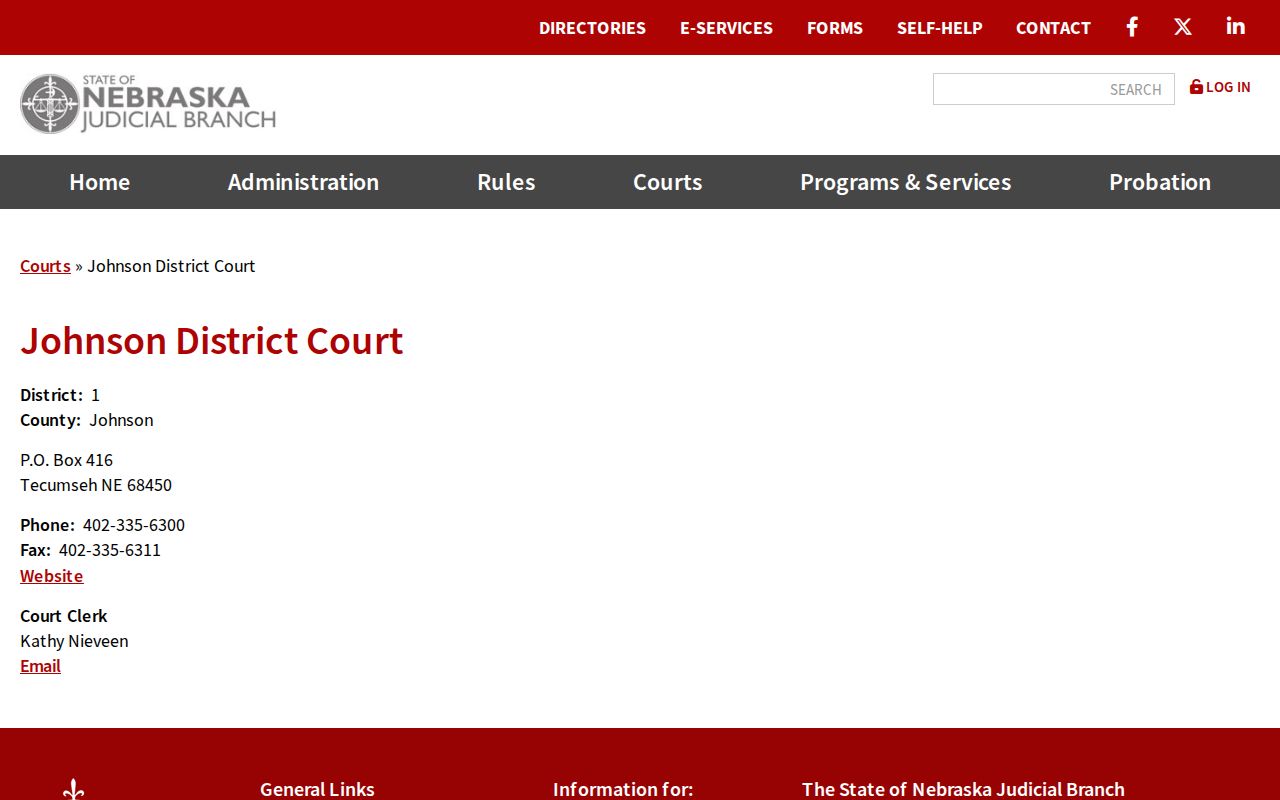
When an online view is limited, contact the clerk and ask whether a public paper file, image, or redacted copy exists.